We live in a culture of activity. Back-to-back meetings. Overflowing Kanban boards. Status reports that track volume over value.

We celebrate motion. But motion is not the same as momentum.
Teams are praised for their output, not always their outcomes. Managers track busyness, not always progress. We reward doing - even when the doing leads nowhere meaningful.
And when work does not flow - when it lurches, loops, or stalls - we rarely stop to ask why. We assume the team needs more resources, better tooling, or clearer governance. But what they actually need is visibility.
Busy ≠ Effective
Activity does not equal progress.
We have confused fullness with flow.
Organisational Service Management (OSM) helps reframe the conversation - from “What are we doing?” to “What are we contributing?”
We start by asking: What are we measuring - busyness or value?
The Map Is Not the Territory
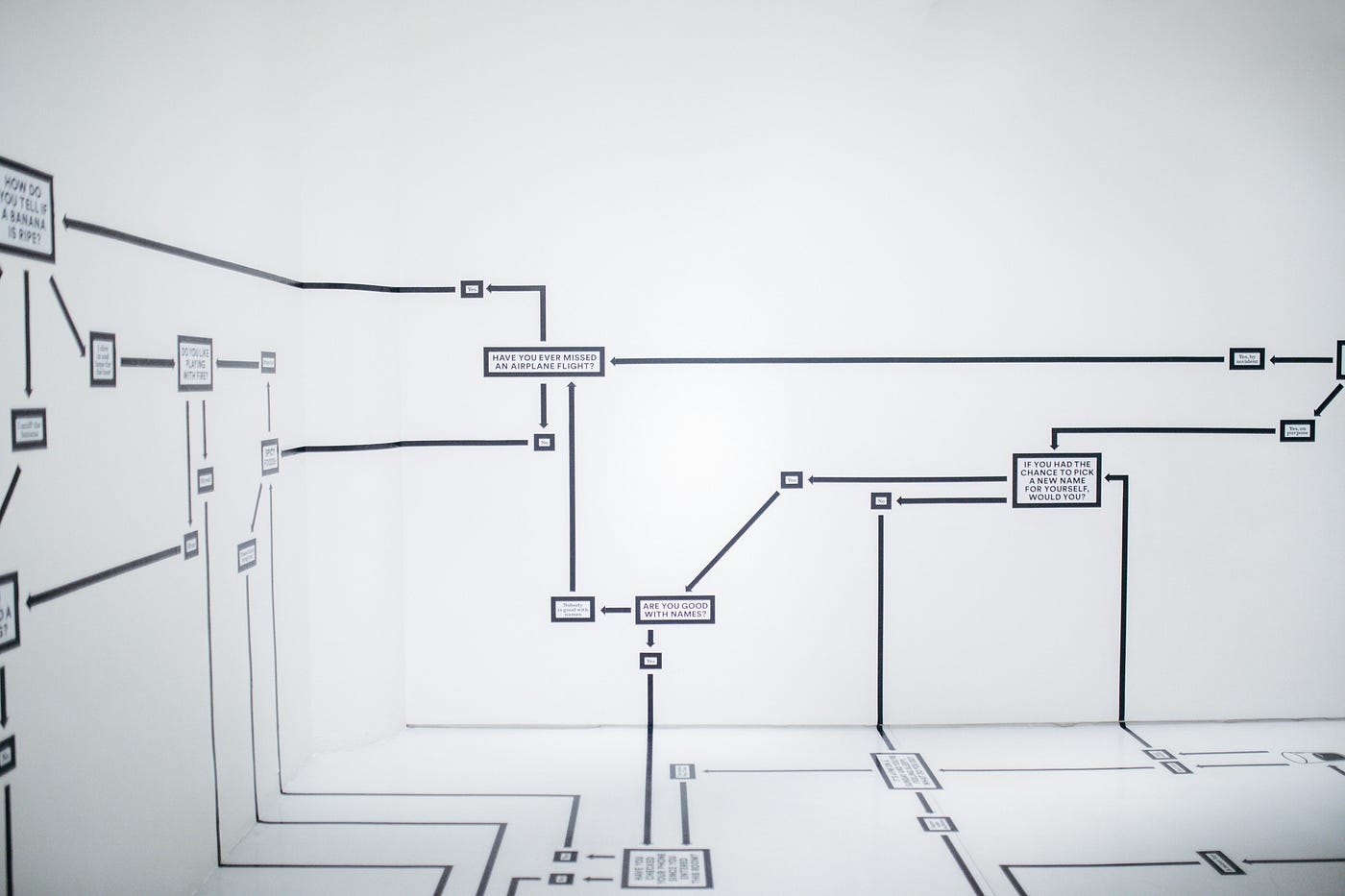
Governance tools often give us neat, structured charts: org trees, workflow diagrams, RACI matrices. But these maps reflect hierarchy, not flow. They show who reports to whom, not how work actually gets done.
Look at your top initiative. Does your plan reflect how work truly moves - or just how it is structured?
In OSM, we build better maps. Maps that reflect the messiness of real work - the human, interdependent, cross-functional flows that actually shape outcomes. Not because they are perfect, but because they are usable.
The Business Case for Seeing Differently
When we improve visibility, we do not just improve planning. We reduce friction. We accelerate decisions. We stop wasting energy on duplication and delay.
Poor visibility leads to duplicated effort - the same decision made three times in three different meetings. It leads to rework, to second-guessing, to friction disguised as diligence.
What is one place your team makes the same decision twice?
Now ask: What would it change if we saw the full picture?
Experience Is a Service
Your customer does not see your org chart. They experience your service.
They feel the handoffs. The waiting. The duplication. The contradictions. They feel the difference between joined-up thinking and bureaucratic box-ticking.
The customer experience is not a “layer” to be added - it is the result of the flows beneath it. OSM helps surface and improve those flows.
When was the last time someone truly owned the entire experience, end-to-end?
So How Do We Start?
OSM introduces the idea of Service Flow literacy: learning to see how value moves through an organisation, not just where effort is applied.
To build this literacy, we need:
- Maps that show real service flow, not just hierarchy.
- Measures that reflect human contribution and outcome, not just throughput.
- Ownership models that follow experience, not just function.
- A shared understanding of “done” that includes felt value - not just completed checklists.
Human Measures That Resonate
Human-centric measures are different. They are not just customer satisfaction scores or ticket volumes. They capture friction, flow, and faith.
- Friction: Where are the blockers that people do not talk about?
- Flow: Is value moving - or looping?
- Faith: Do people believe this service will actually help?
When we measure these, we learn where to act - not just where to blame.
Embracing Multi-Dimensional Human Measures
Human measures are multi-dimensional - spanning not just task completion, but communication, coordination, authenticity, and credibility.
When we optimise for a single dimension in isolation, we often damage another. A “faster” process might erode trust. A “leaner” team might lose coherence.
These trade-offs matter.
That is why OSM treats services not as atomic units, but as dynamic ecosystems. Everything co-exists in a web of influence. Life is not linear. Experience is messy. And any model that flattens that complexity in the name of simplicity risks doing more harm than good.
Simplicity is valuable - but only when it honours the richness of what it represents.
The Promise of Flow
True flow does not just feel better - it performs better. It reduces waste, accelerates outcomes, and improves trust across the board.
But you cannot enforce flow. You have to design for it.
OSM helps teams:
- Identify where flow breaks down
- Create shared understanding across boundaries
- Reframe success around contribution and impact
Because activity without flow is not just inefficient - it is exhausting.
And exhausted organisations do not change. They cope. They survive. They react.
To thrive, we need flow. And to create flow, we need to see again - to map, measure, and manage differently.
That is what OSM is for.
Closing
Sharing this is part of my own journey in building Strategenz and driving a new new way of thinking - and if something here resonated, sparked a thought, or challenged how you see things, I would love to hear it.
Drop a comment, follow along, or share it with someone navigating their own transformation.