Strategy as Insurance

Tier One strategy firms don’t really sell strategy anymore.
They sell insurance.
For decades, the Tier One firms were the symbol of elite strategy.
Boardroom alchemy. Razor-sharp thinkers. The best brains money could buy.
When something was truly hard, truly consequential, you brought them in.
I grew up professionally in organisations where a Tier One engagement still meant something. It signalled intent. It said: we are prepared to be challenged. Not just validated.
Somewhere along the way, though, the product changed.
It stopped being insight.
It stopped being transformation.
What emerged instead was something safer, more subtle - a strategy-as-cover industry, built around defensibility rather than direction.
Today, when many boards call Tier One advisors, it isn’t because they want a bold answer. It’s because something has already gone wrong.
Sales are falling.
A new technology is looming.
AI has arrived and the executive team doesn’t quite know what to do with it.
I’ve sat in those rooms. The tension is familiar. People are not looking for the right answer - they are looking for a defensible one.
You don’t bring in Tier One advisors to fix the problem.
You bring them in to spread the risk.
The strategy-as-cover industry isn’t always hired to be right.
It’s hired to be defensible.
Translation: If this fails, it won’t be our fault.
This is strategy by plausible deniability.
And it works - politically.
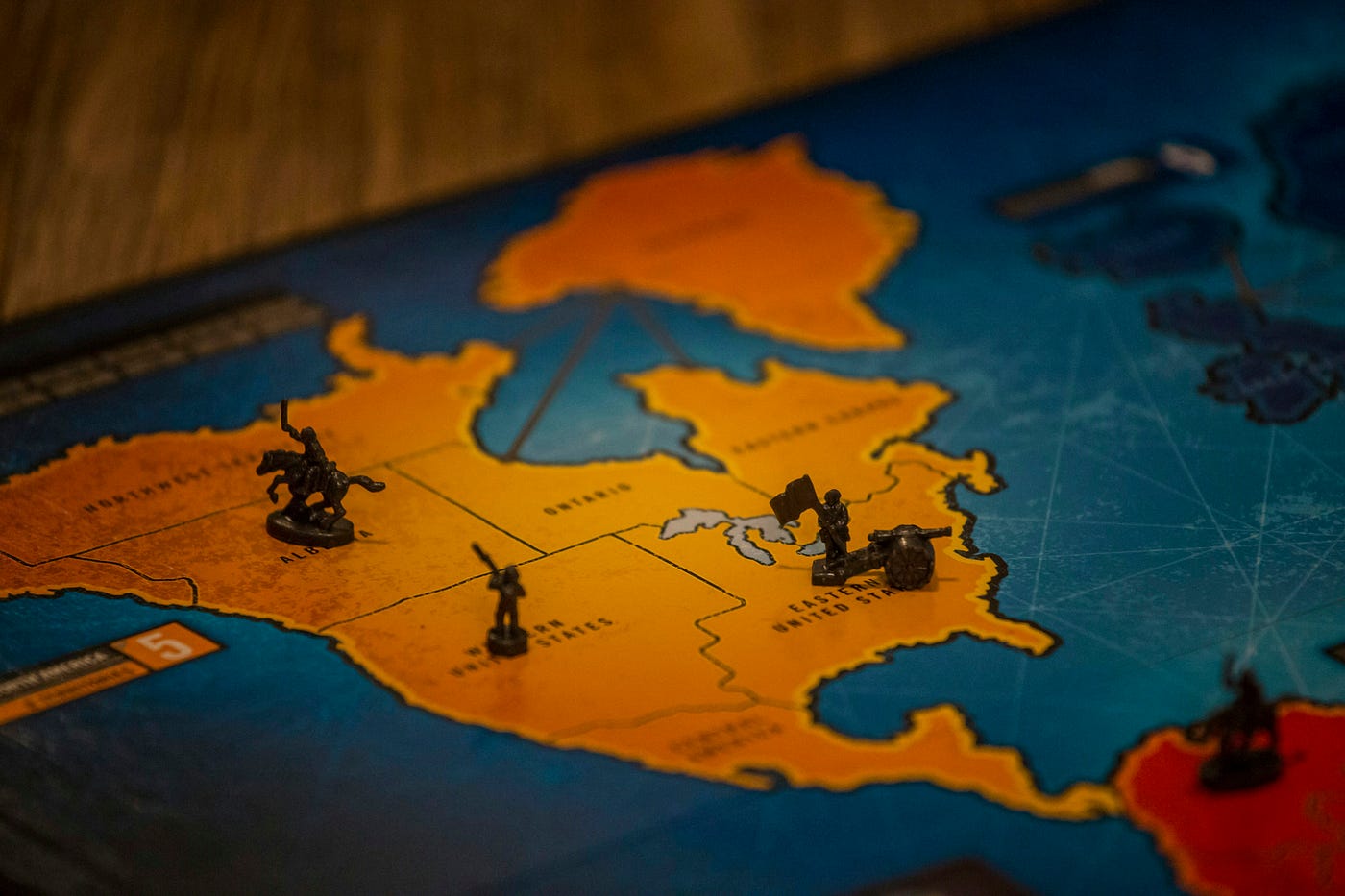
The Break‑Even Deck

Hiring a top‑tier strategy firm now buys three things:
- Time - to stall hard decisions
- Borrowed Credibility - to calm investors and boards
- Cover - to shield individuals from blame
And for many executives, that’s enough.
I’ve watched entire programmes exist purely to maintain that cover. Months of activity, endless workshops, beautifully structured decks - all optimised to avoid committing to anything that might expose an individual leader.
Not a bold roadmap.
Not an uncomfortable truth.
Just someone credible to stand beside them when the hard questions arrive.
The irony is that real strategy is inherently risky.
It demands ownership.
It creates exposure.
It forces leaders to place a stake - not just approve a deck.
Instead, much of what passes for “strategy” today is built from familiar components: best practice, turf protection, risk avoidance, and transformation theatre.
I’ve helped organisations unwind years of these accumulated decisions. Each one made sense at the time. Each one was defensible. And collectively, they locked the organisation into a future nobody would have consciously chosen.
These elements get wrapped into a single, reassuring concept called Strategy - and an entire industry has grown wealthy delivering it.
But using what has been, simply because it is defensible, is no different from playing cards with a loaded deck.
Not a deck that helps you win.
Not even one that guarantees you lose.
A deck designed to break even.
Breaking even feels safe.
It also guarantees irrelevance.
Stakes, Not Plans
True strategy is not about certainty. It’s about intent.
It’s about taking a stake - a conscious decision about where you are heading - and then paying close attention to how reality responds.
Every meaningful strategy I’ve seen succeed started this way. Not with a master plan, but with a directional bet and a willingness to learn in public.
Strategy is directional.
Plans are mechanical.
Confusing the two is one of the most damaging habits in modern organisations.
A strategy does not need to be grounded in execution detail. It can begin as a vision, a belief, even a wish. What matters is whether, at this moment in time, you can credibly say you are on your way.
That credibility comes from signals, not documents.
From decisions made.
From trade‑offs accepted.
From behaviours that align with intent.
This is why strategies that take nine months to “complete” are usually obsolete before they are approved. I’ve lived through those cycles. By the time alignment is reached, the market has moved, the people have changed, and the opportunity has expired.
When we take too long to decide where we are going, we pass the point at which the decision is useful.
The ‘Strategic Plan’ break from sanity
There is no such thing as a strategic plan.
They are two fundamentally different things.
Plans explain how.
Strategy explains why - and where.
Plans can be delegated.
Strategy cannot.
Putting the two together and claiming a win is just racing to failure.
I have been around far too many organisations that claim they ‘have’ a strategic plan, which amounts to a gantt chart equivalent of things that they want to achieve.
Nothing says ‘why’, nothing forms a glue that aligns people, they just become arbitary boxes to tick off to claim momentum
Lighthouse on the Shore

This is where Organisational Service Management (OSM) comes in - not as another framework, but as a different way of seeing.
OSM acts like a lighthouse.
A lighthouse doesn’t illuminate the entire coastline.
It doesn’t provide a step‑by‑step route.
And it certainly doesn’t guarantee safe passage.
What it does is provide a fixed point of reference.
A signal that says: this is where you are in relation to where you’re trying to go.
That distinction matters.
Most organisations try to manage uncertainty by pretending it doesn’t exist. They create ever more detailed plans, more milestones, more artefacts - as if precision can substitute for direction.
OSM works the other way around.
It accepts uncertainty as a given and focuses instead on orientation.
It asks:
- What services actually exist today?
- Who consumes them, who depends on them, and who is impacted when they fail?
- Where are we investing energy that no longer aligns with intent?
- Where are signals emerging that reality is diverging from strategy?
Rather than forcing alignment through documents, OSM exposes alignment - or the lack of it - through observable service behaviour.
This is why it doesn’t try to “light up” the whole organisation.
OSM doesn’t tell leaders what decision to make - it makes it harder to pretend a decision hasn’t been made, and even harder to hide behind indecision.
Trying to see everything at once is what leads to paralysis.
Instead, OSM creates just enough visibility to support decision‑making: clear sightlines between intent, services, and outcomes.
When leaders can see how strategy is (or isn’t) showing up in the services their organisation actually delivers, they don’t need insurance.
They can navigate.
Not with certainty.
But with awareness.
And awareness, in complex systems, is far more valuable than confidence.
Leadership with Credible Uncertainty
Leadership is not about eliminating uncertainty.
It is about managing it honestly.
Real leaders are clear about what they know, what they don’t know, and what they are choosing to learn next. They don’t hide behind complexity, delay, or the comfort of external authority.
Credible uncertainty is not indecision.
It is the ability to say:
- This is our intent.
- This is what we understand today.
- This is where the signals suggest we may be wrong.
- And this is how we will adjust if reality proves us wrong.
I’ve seen leaders lose trust not because they were wrong, but because they pretended they weren’t unsure. Certainty theatre might feel reassuring in the moment, but it erodes credibility over time.
This is where the insurance model of strategy ultimately fails.
Cover delays accountability.
Decks replace dialogue.
And leadership becomes something performed, rather than practiced.
But real leaders don’t need cover.
They need clarity.
They need ownership.
And often, they need the courage to act before the market forces their hand.
Because strategy was never meant to protect you from failure.
It was meant to help you choose what you are willing to risk.